Buru, 1738 · Earthquakes
The day the sea ran up the rivers
In 1738, people on an Indonesian island fled uphill as seawater rushed inland. A Dutch official described it twice. His letters preserve evidence of a tsunami missing from modern catalogues.
Compare the two letters ↓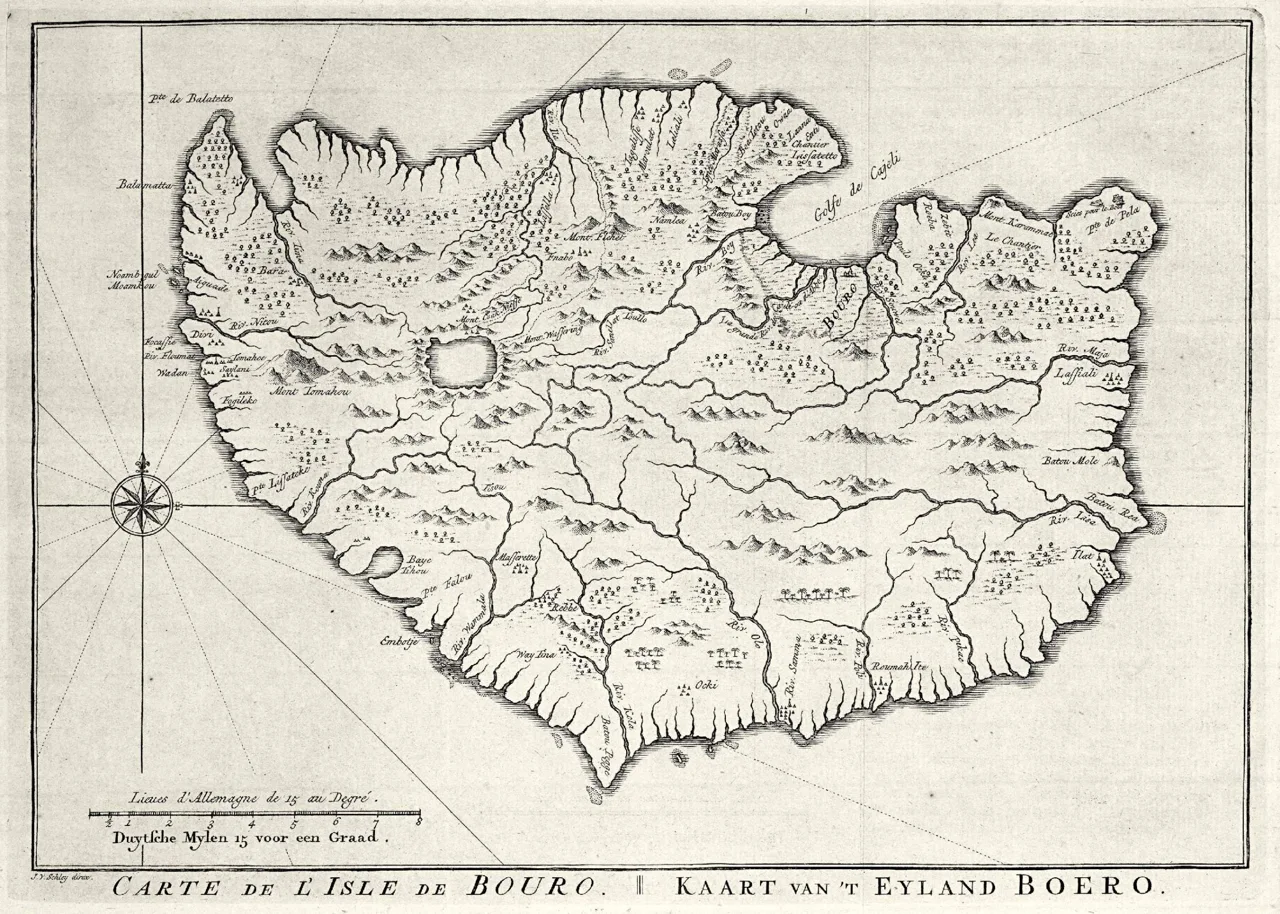
A morning on Buru
At about eleven on 14 September 1738, the ground shook on Buru, an island in what is now eastern Indonesia. Then the sea came up the rivers so fast that the moat around the Dutch trading post filled almost at once. People ran uphill. The next day, Carel Gustaeff Gledstein, the Dutch East India Company official stationed there, sent an account to his superior on the island of Ambon.1
Some of what Gledstein knew came from people around him. The headman of Masarete reported that an older man had drowned. A sergeant and an assistant surgeon examined the body. The letter preserves the headman’s report at second hand. The man who died goes unnamed in this passage.2
Compare the two letters
Find the wave count in each piece of handwriting. You can mark the words, switch languages, or open either image to read the full page.
15 September 1738
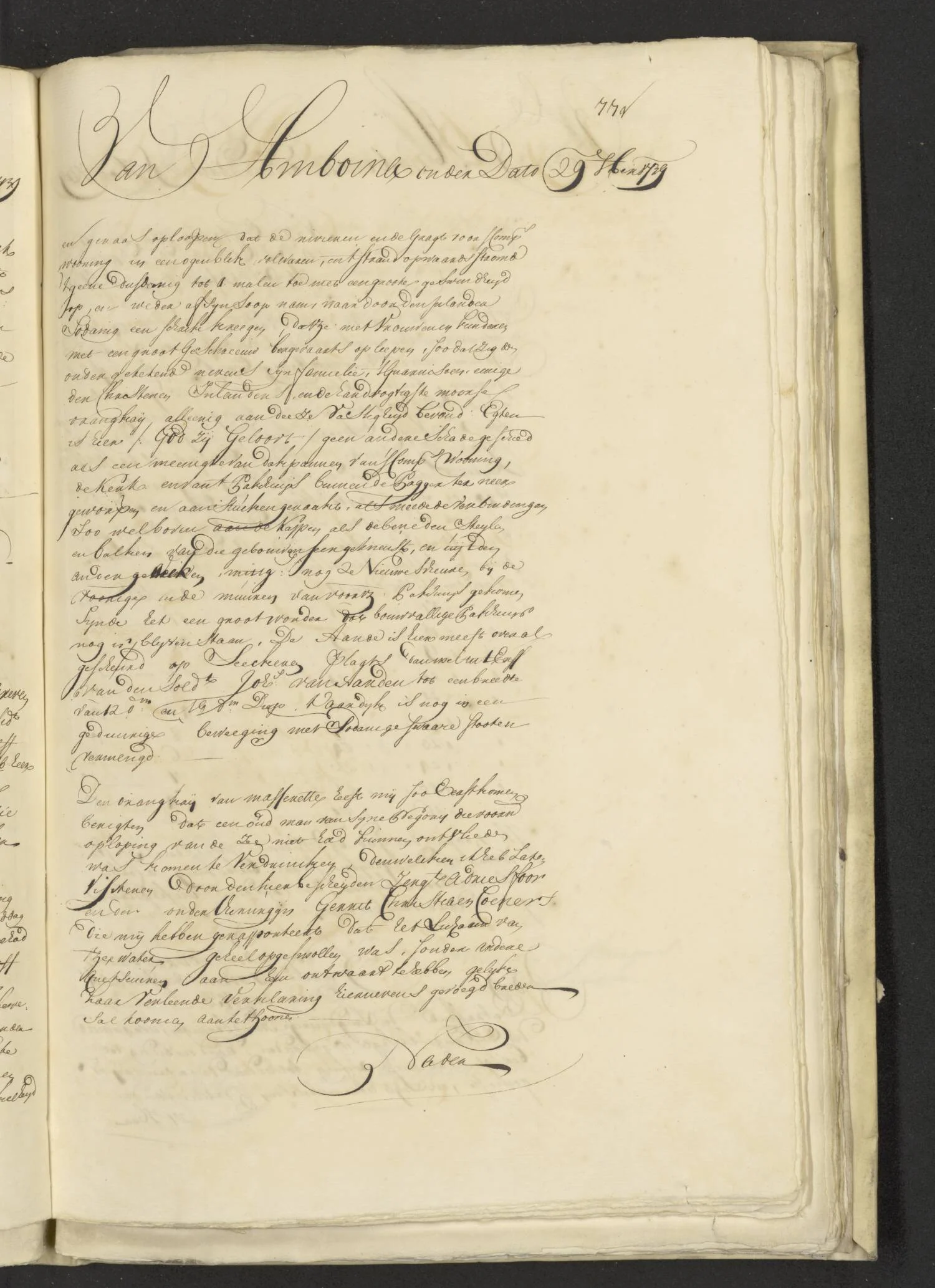
“as many as four times”“tot 4. malen toe”
Here Gledstein describes the water rising and falling. On the line above, he says the rivers and the moat filled in an instant.
27 September 1738
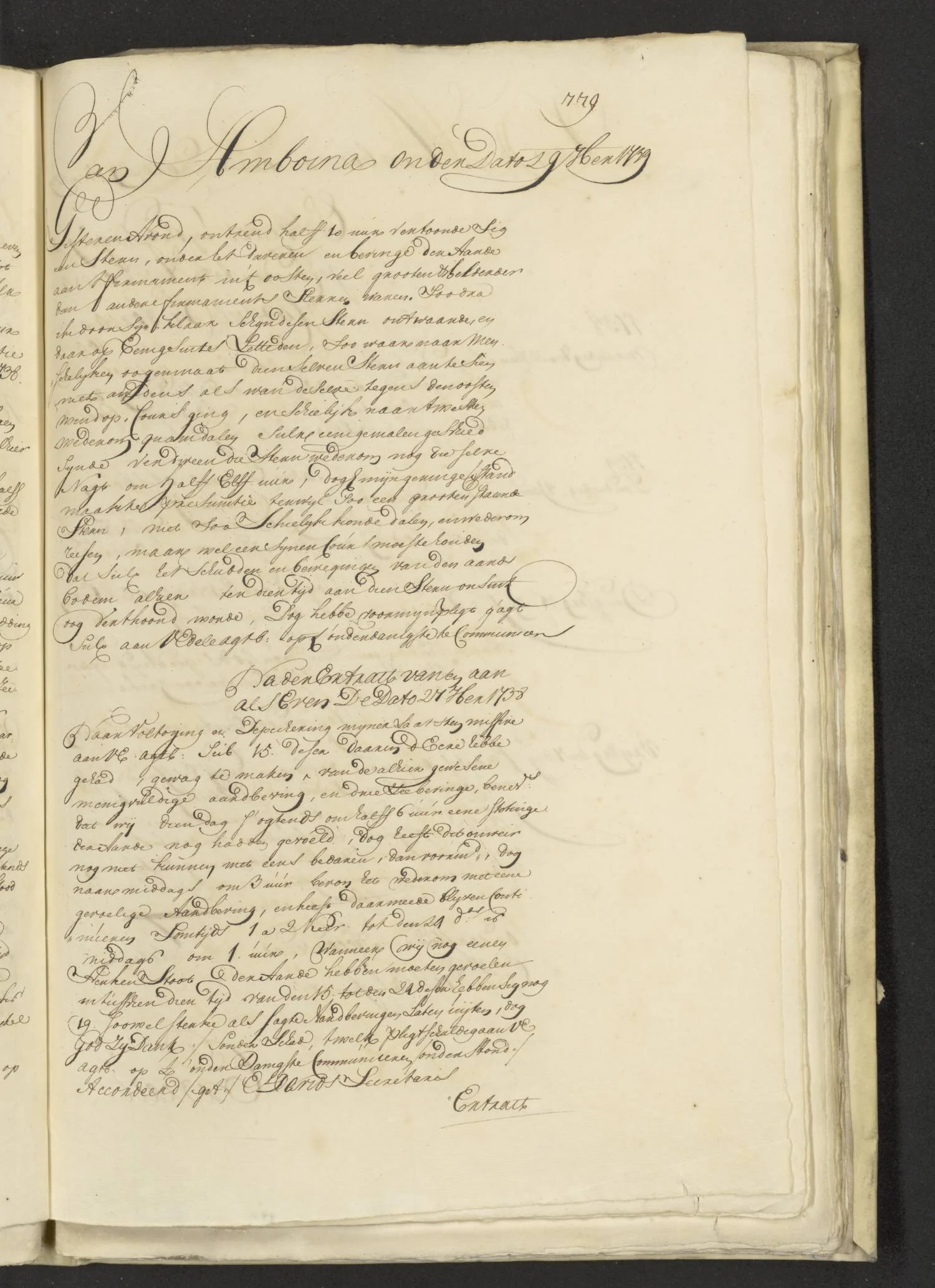
“three surges of the sea”“drie zeeberinge”
Writing again to the governor, Gledstein refers back to his letter of the 15th. This time he sums up the floods in two words.
How the search worked
The Company sent copies of letters and reports back to the Netherlands. Today the GLOBALISE project makes machine transcriptions of those handwritten pages searchable. Research agents looked for old Dutch words for shaking ground and rising water, then checked the dates, places and wording in the manuscript images. Reading the heading on each letter revealed that one official had written both.3
What the letters add
A tsunami is a series of waves that forms when a large amount of water is suddenly displaced. The timing of the shaking and the repeated rushes of seawater make a strong case that one reached Buru. Long before instruments recorded these waves, people kept track of where the water went. Their accounts can extend the history of a particular coast by centuries. The search found no entry for these waves on this date in the Indonesian and international catalogues it checked. A separate entry mentions earthquake damage to a church on Buru in 1739. Whether the same earthquake damaged the church remains an open question.4
Where else did the water reach?
Gledstein gave no wave height, and his letters alone cannot locate the earthquake offshore. A ship’s log or a daily register kept at another post could record the same morning from a different stretch of coast. Even a few words about when the sea arrived, or where it stayed calm, would help establish how far the waves travelled.
Notes and sources
-
1
The surviving extract names Gledstein, his recipient and the date. He gives the hour of the earthquake and calls it “yesterday.” Opening of the letter, scan 792 · Continuation, scan 793.
-
2
The drowning, the headman’s report and the examination appear together on scan 793.
-
3
GLOBALISE provides access to Dutch East India Company records. In the 27 September letter, Gledstein explicitly refers back to his report of the 15th.
-
4
Compare the Maluku entries in Indonesia’s tsunami catalogue, NOAA’s tsunami database and the earthquake record GN-0123 in Gempa Nusantara.