Washington, D.C. · March 1902
Did Langley ever try Bell’s kite designs?
Samuel Pierpont Langley, an astronomer who ran the Smithsonian Institution, had flown a steam-powered model airplane. Now he was building one large enough to carry a pilot. Alexander Graham Bell, who had patented the telephone in 1876, had spent years building kites. After the two men tried one of Langley’s kites together, Bell suggested two ways to rebuild it. A few pencilled lines in a notebook preserve his advice.
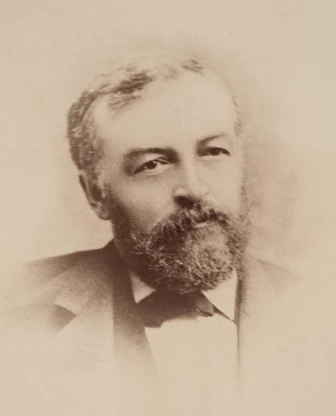
Smithsonian Archives
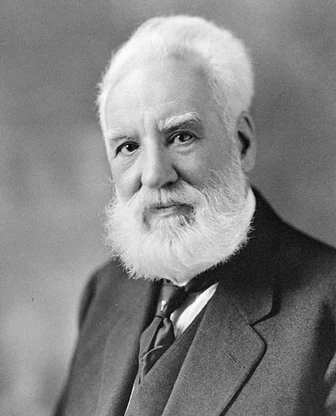
Library and Archives Canada
A kite that might right itself
On March 10, 1902, Langley and Bell took a boat to Analostan Island in the Potomac River at Washington, D.C. They had come to try a kite with a six-sided frame and a curious tail. As Bell understood it, if the kite tilted, a weight would slide along a rod and adjust the tail to bring the kite level again. For anyone hoping to put a person in the air, it mattered whether a flying machine could recover its balance.
That afternoon there was hardly any wind. Bell ran with the string, then let go when he saw that Langley’s kite would come down hard. In his journal he suggested trying again from the top of a pole, where Langley could watch how the kite behaved without smashing it.1
What the notebook adds to Bell’s account
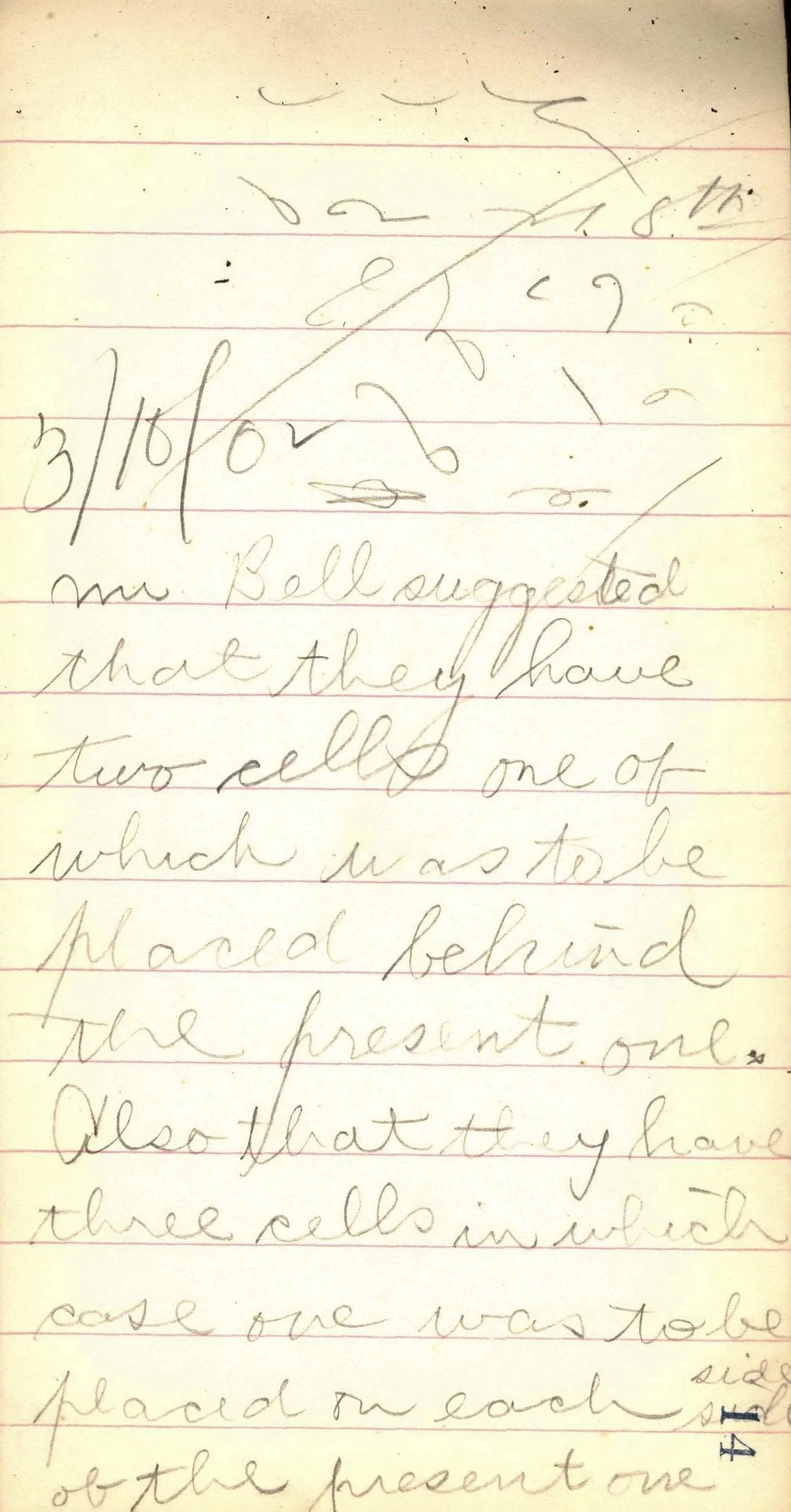
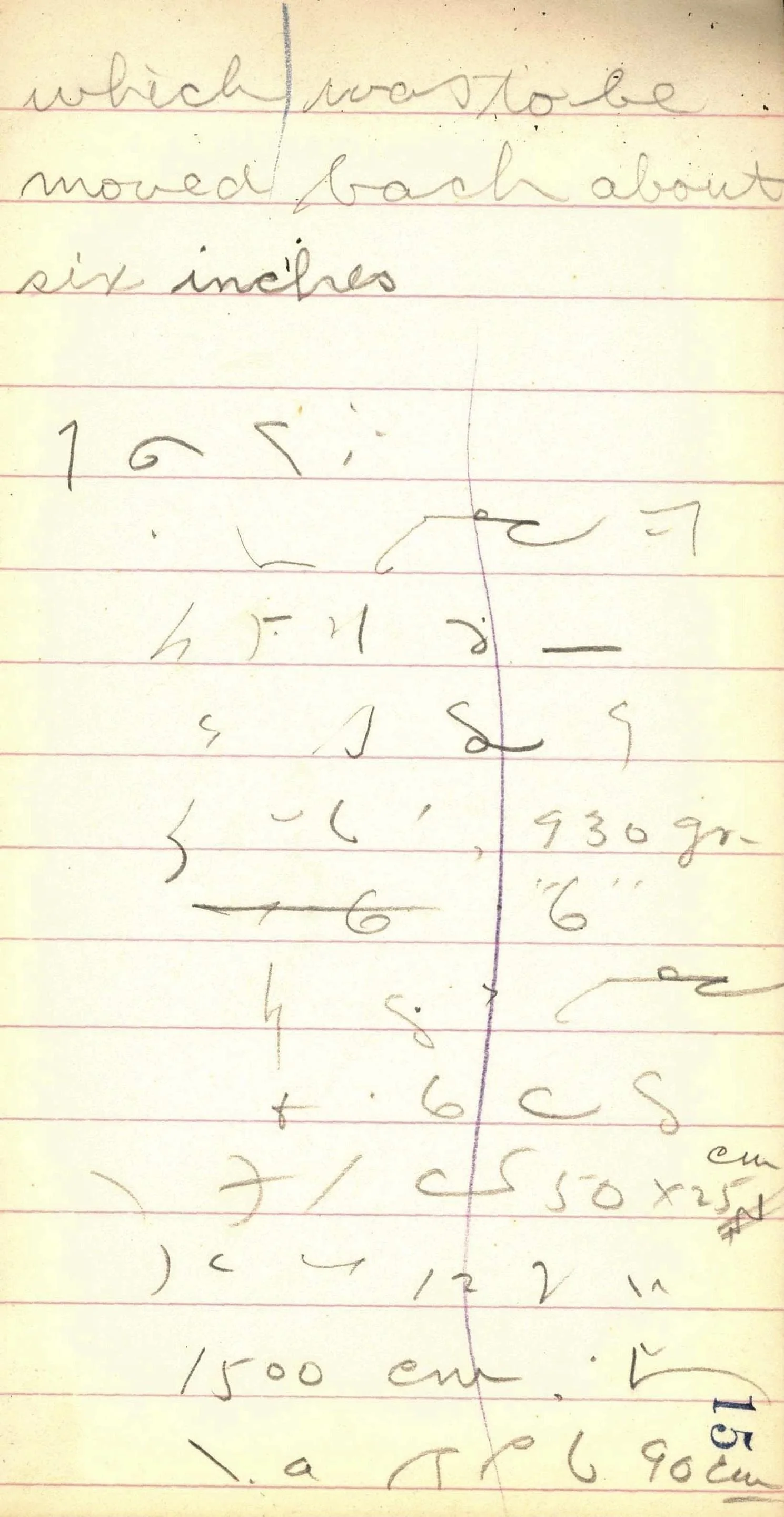
AI agents found another account among Langley’s papers. Partway down a page of shorthand, the writer switched to ordinary handwriting and wrote “Mr Bell suggested”. The kite’s frame formed a single open compartment, called a cell. Bell proposed adding a second cell directly behind it. His other idea was to add one cell on each side, then move the middle one back about six inches.2
How the agents identified the kite
The Smithsonian catalogues this notebook as undated. Even with Bell’s name, which kite did the writer mean? Page 15 gives two figures, 930 grams and 50 × 25 centimetres. Bell copied into his journal a letter Langley sent him on March 11 about the previous day’s trial. The kite weighed 930 grams with its balancing weight, Langley wrote, and each of its twelve panels measured about 50 × 25 centimetres. Those figures tie the notebook passage to the March 10 outing.3
Why the shorthand is still unread
The kite passage turned up in a search for something harder to read. The Smithsonian holds 37 notebooks from Langley’s papers, much of their content written in shorthand, a way of taking rapid notes by using strokes and curves to stand for sounds or whole words. AI agents sampled 1,108 of the collection’s 7,248 scans. They also ran handwriting recognition over every page of four notebooks to look for names and phrases in ordinary script. The software sometimes turned shorthand strokes into plausible English words, so the agents checked promising passages against the page images.4
In another notebook, the words “towed by a steamship” were legible. Just before them was a single downward stroke. The agents compared it with two shorthand manuals of the period. In one system a heavy stroke of that shape could mean “all”, while a lighter one could mean “to”. The pencil pressure varied across the page. Neither the neighboring pages nor a search of Langley’s published account supplied the same sentence in ordinary writing. The agents could identify the kite and Bell’s advice, but they could not reliably transcribe a continuous passage of shorthand.5
Did either design get into the air?
The agents found no record of a flight with either arrangement. One place to look is the Smithsonian’s diary of Langley’s experimental work for the U.S. Army in 1901–02. An entry after March 10 describing two cells in line, or three across with the middle one set back, would be worth comparing with dated workshop drawings. An account of a launch with that arrangement could establish that someone actually tried it.6
The shorthand presents a different opening. A specialist could start with a dated notebook entry and a letter about the same experiment. If several consecutive words in the letter fit the strokes on the page, a second reader could test that reading independently. That would give researchers a way to check what the notebooks say about experiments for which no letter survives.
Notes and sources
-
1
Bell described the outing, sketched the kite from memory and explained what he thought the sliding weight did in his journal, pp. 631–634. The Smithsonian traces Langley’s progression from powered models to a machine with a pilot in its guide to his papers.
-
2
National Air and Space Museum Archives, Langley Collection, box 62, folder 7, notebook pp. 14–15. Both arrangements appear here. Bell’s account of the trial records his advice about the pole.
-
3
Compare the notebook measurements with Langley’s March 11 letter, reproduced on p. 634 of Bell’s journal at the Library of Congress.
-
4
The Smithsonian catalogue lists all 37 volumes. The agents’ list of sampled scans (CSV) identifies each volume and page in the survey.
-
5
See notebook p. 99 (scan 100), the 1892 Pitman manual (sign table, p. 83), the 1898 Gregg manual and Langley and Charles Manly’s Memoir on Mechanical Flight (1911).
-
6
The Samuel P. Langley Papers, Record Unit 7003, list the 1901–02 Ordnance and Fortifications diary in box 13. The agents located the catalogue entry. The diary itself still needs to be examined.