Makassar & Sydney, 1781–1792 · Disease history
Was Makassar carrying smallpox in 1788?
Fifteen months after the First Fleet landed at Sydney Cove, smallpox devastated Aboriginal communities around the harbour. One leading theory blames sea-cucumber fishers sailing south from Makassar, in eastern Indonesia. A search of 4.79 million Dutch East India Company pages finds no smallpox in Makassar in 1788—or for six years before it—while turning up a forgotten 1782 outbreak there and a decade of epidemics sweeping the surrounding islands.
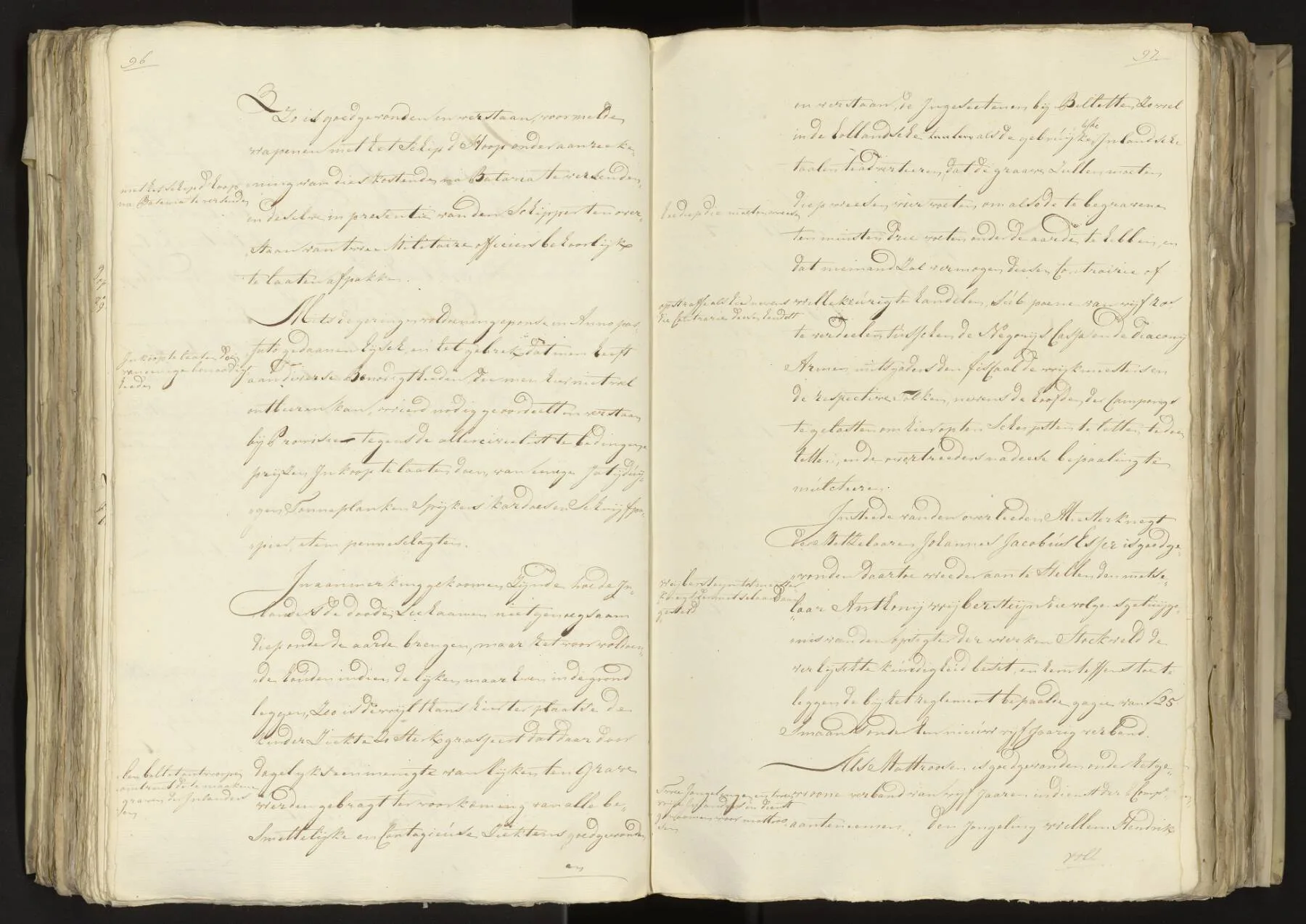
What happened in Sydney in 1789, and why historians still argue about it
In January 1788, eleven British ships (the First Fleet) anchored at Sydney Cove to build a penal colony on the land of the Gadigal and neighbouring Aboriginal peoples. Fifteen months later, in April 1789, smallpox broke out around the harbour. Within weeks, British officers were finding dead and dying people in rock shelters along the coves. Governor Arthur Phillip estimated that half the Aboriginal population around Port Jackson died. No British convict or marine caught it, except a single Native American sailor aboard HMS Supply.1
Two main explanations compete for how the virus arrived. One points to the British settlement itself: First Fleet surgeons carried dried smallpox scabs sealed in glass bottles for inoculation, and historians such as Christopher Warren argue that this “variolous matter” was released around Sydney Cove, accidentally or deliberately. The other explanation, developed most fully by Judy Campbell in 2002, looks 3,000 kilometres north. Every year during the northwest monsoon, fishing fleets sailed from Makassar (on the Indonesian island of Sulawesi) down to Arnhem Land in northern Australia to harvest and dry sea cucumbers, called trepang, for the Chinese market. In Campbell’s version, an infected crew brought smallpox to northern Australia, and the virus then travelled along Aboriginal trade routes across the continent to hit Sydney in April 1789.
Much turns on which version is right. If the First Fleet brought the epidemic, British colonization began with a biological catastrophe of its own making; if Macassan fishers brought it, an older Asian maritime network reshaped Australian history independently of the British landing. Yet for decades both sides argued without checking the Dutch East India Company’s own papers from Makassar.

What the Dutch papers show
The northern theory hinges on timing. Smallpox incubates for roughly two weeks, and the trepang fleets left Makassar between late November and mid-January on the monsoon winds. For a boat leaving in December 1788 to carry live smallpox to northern Australia, the disease had to be circulating in Makassar—or at a port where crews stopped—right around that departure window.
The Dutch East India Company (VOC) governed Makassar from Castle Rotterdam and shipped copies of its council resolutions, letters, secret diaries, and shipping lists back to the Netherlands every year. Through the GLOBALISE project, 4.79 million pages of those handwritten records are now machine-transcribed and searchable. We searched the full archive for period spellings of smallpox and read every matching page across the 35 volumes containing Makassar’s records from 1783 to 1792.2
- No smallpox at Makassar from 1783 to 1792. Across all 35 Makassar volumes, there is not a single report of smallpox in Makassar or its neighbouring ports (Bone, Bima, Sumbawa, Selayar). Clerks had not stopped recording deaths: the same offices logged single enslaved smallpox deaths in earlier years, and in 1788–91 continued logging enslaved deaths by cause, as “natural illness.”
- A forgotten Makassar epidemic in spring 1782. Six years too early for Sydney, smallpox hit Makassar hard enough that Castle Rotterdam’s council passed an emergency placard ordering graves dug four feet deep. That explains the faint pockmarks British botanist Robert Brown noticed on a Macassan crew in 1803—the clue Campbell had used to infer a late-1780s outbreak.
- Staggered, devastating outbreaks across neighbouring islands—not endemic circulation. Elsewhere in eastern Indonesia, the Company papers record a previously unmapped chain of epidemics: Banda (1784), Kupang on Timor (1786, over 1,000 dead), Ambon (1786–87, 3,573 dead), Rote and Savu (1787), Pasir on East Borneo (Feb 1789), interior Timor (spring 1789), Ternate and Halmahera (1791–92), and Solor (1792). Rather than smouldering continuously in Sulawesi ports, smallpox struck in sharp bursts separated by seven to eighty years.
Eastern Indonesia & northern Australia · 1782–1792
Where smallpox struck—and when
Showing all nine dated VOC sites (1782–1792). Note how staggered the outbreaks were—years apart across different islands, never at Makassar after 1782.
Four-foot graves in 1782, then ten quiet years
On a crowded double page of Castle Rotterdam’s council resolutions from spring 1782, tucked between routine shipping business and the hiring of a new master bricklayer, the Dutch governors stop to deal with an urgent burial problem. Local residents were putting corpses barely under the dirt. Because smallpox was raging so fiercely that “a crowd of corpses is carried to the grave every day,” the council ordered a public placard posted in Dutch and local languages: every grave had to be dug four feet deep, leaving at least three feet of earth above the body, backed by a five-rixdollar fine split between the town fund, the church poor-box, and the prosecutor. A companion letter dated 17 June 1782 ties the placard to the session of 15 April 1782.3
Makassar’s harbourmaster registers for the same winter show roughly a dozen trading praus clearing port between 26 November 1781 and 18 January 1782 for Bonerate, Buton, and Sumbawa—the island hubs where merchants met sea-cucumber fishers. If a Makassar outbreak ever rode the trepang network in the 1780s, 1781–82 is the one season in the decade where the disease and departing boats overlap. After spring 1782, Makassar’s smallpox record goes completely flat for the next ten years.
Epidemics across the surrounding islands, 1784–1792
While Makassar remained quiet after 1782, the wider eastern-Indonesian correspondence records a slow, violent series of outbreaks moving from island to island—almost entirely missing from published histories of Indonesian disease.4
In September 1786, the Dutch resident at Kupang on Timor wrote to Batavia apologizing for missing his annual quotas of beeswax, sandalwood, and honey. Second on his list of four excuses was “the pestilentially raging smallpox,” which had killed well over 1,000 people within a two-hour walk of the fort in five months, plus more than 200 Savunese soldiers and 150 Company workmen; healthy villagers had fled into “caves and cliffs” rather than gather wax. Three months later, in December 1786, a Chinese trading vessel from Java carried smallpox to Ambon, where it had not raged since the early 1700s. Within ninety days more than 3,000 people were dead under the main castle (3,573 by year-end), and the governor posted an official at the bay mouth to board every incoming boat.
By September 1787 the epidemic had jumped to Rote and Savu (“virtually without precedent”), stalling relief troops from the outer islands. During the actual late-1788 / early-1789 Sydney sailing window, only two regional reports appear anywhere in the archive: in February 1789, Castle Rotterdam’s secret diary noted that Sultan Sleeman of Pasir, northwest across the Makassar Strait on Borneo, had moved inland to a village called Gapper “fearing the pox”; and that same spring, beeswax traders in Belu (central Timor) turned back empty-handed because hill peoples refused to come down while smallpox flared again. In November 1791, smallpox and measles swept Ternate, Tidore, Manado, and Halmahera for the first time in 27 years, halting a Dutch campaign against Prince Nuku as villagers fled clove-eradication gangs out of fear of both soldiers and contagion.
Read the six verified manuscripts
Every quotation below was checked directly against the page scan at the Nationaal Archief in The Hague. Switch between English and original Dutch, turn on the highlight box to locate the key phrase in the clerk’s handwriting, or click any detail to open the full spread.
Spring 1782Makassar, Sulawesi: Four-foot graves at Castle Rotterdam
“…since smallpox is now raging so fiercely in this place that a crowd of corpses is carried to the grave every day, to prevent all infectious and contagious illnesses it is resolved … that graves must be dug four feet deep.”
“…zoo is dewijl thans hier ter plaatse de kinder ziekte zo sterk grasseert dat daar door dagelyks een menigte van lijken ten grave werden gebragt ter voorkoming van alle besmettelijke en Contagieuse ziektens goedgevonden … dat de graaven zullen moeten diep weesen vier voeten.”
The Makassar council complained that local residents were putting bodies barely beneath the soil. It ordered a public placard in Dutch and local languages requiring every body to rest at least three feet underground, backed by a five-rixdollar fine split between the town fund, the poor-box, and the prosecutor. A companion general letter dates the placard to the session of 15 April 1782—six years too early to explain Sydney in 1789.
20 September 1786Kupang, Timor: Missing wax quotas, caves, and over 1,000 dead
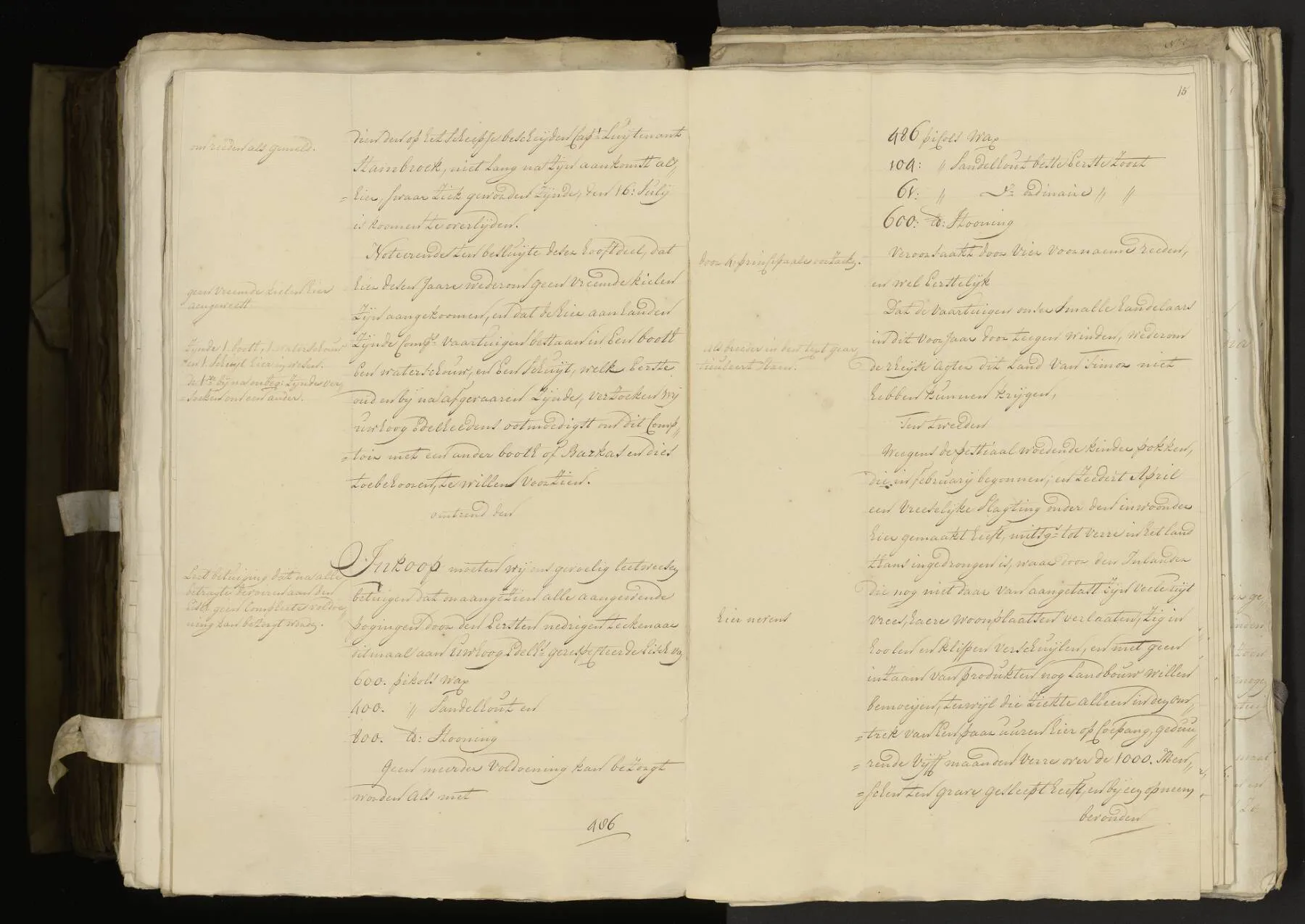
“Secondly, because of the pestilentially raging smallpox, which began in February and since April has caused a terrible slaughter among the inhabitants here … so that many locals not yet struck leave their homes out of fear, hide themselves in caves and cliffs … while in five months, within a couple of hours’ walk of Kupang alone, it has dragged well over 1,000 people to the grave.”
“Ten tweeden Weegens de pestiaal woedende kinder pokken, die in februarij begonnen; en zeedert April een vreeselijke slagting onder den inwoonder hier gemaakt heeft … waar door den Inlander die nog niet daar van aangetast zijn veele uijt vrees, haere woonplaatsen verlaaten, zig in hoolen en klippen verschuijlen … geduurende vijff maanden verre over de 1000. Menschen ten grave gesleept heeft.”
The smallpox passage sits inside an apology for falling short on Batavia’s annual order of 600 piculs of beeswax, 400 of sandalwood, and 800 pounds of honey. Alongside the 1,000 deaths near Kupang, the letter counts over 200 Savunese auxiliaries and 150 Company workmen dead. Neither this outbreak nor its toll appears in Hans Hägerdal’s standard history of VOC Timor.
19 March 1787Ambon, Maluku: A Chinese ship from Java and 3,000 dead in three months
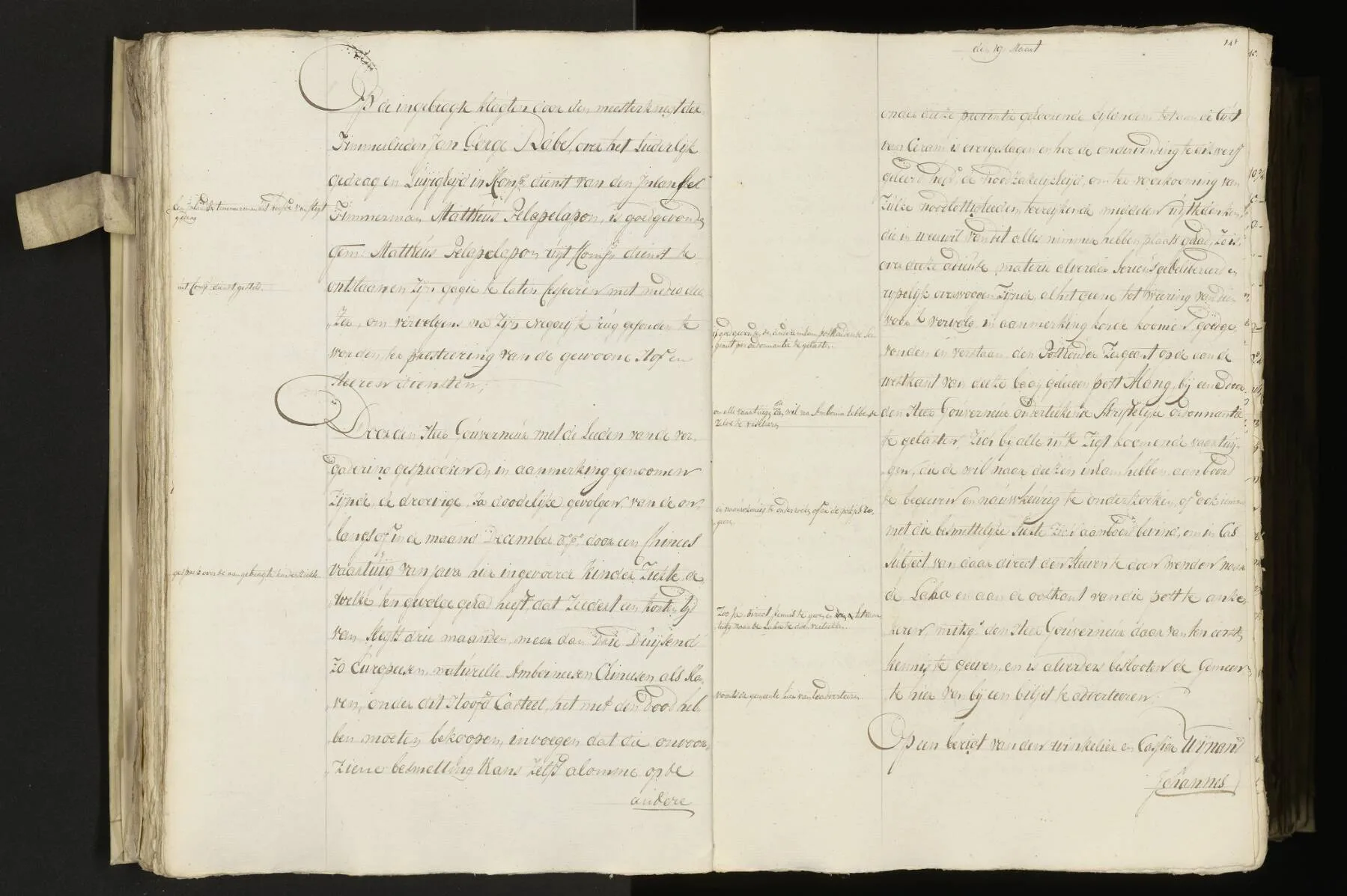
“…the smallpox brought in here last December by a Chinese vessel from Java, which has resulted in more than three thousand people—Europeans, native Ambonese, Chinese, and slaves alike—paying for it with their lives under this main castle in the short space of just three months.”
“…in de maand December a:o p:o door een Chinees vaartuig van Java hier ingevoerde kinder Ziekte, dewelke ten gevolge gehad heeft, dat zeedert een korte tijd van slegts drie maanden, meer dan Drie Duijsend zo Europeesen, naturelle Amboineesen, Chineesen als Slaven, onder dit Hoofd Casteel, het met den dood hebben moeten bekoopen.”
On the facing page, the council orders a postholder at the mouth of the bay to board every incoming craft and check for anyone carrying the contagion. By the end of the year the annual letter puts the toll at 3,573 dead and notes that smallpox had not raged on Ambon since the early 1700s—nearly eighty years without an epidemic.
20 September 1787Rote & Savu: “Virtually without precedent” on the outer islands
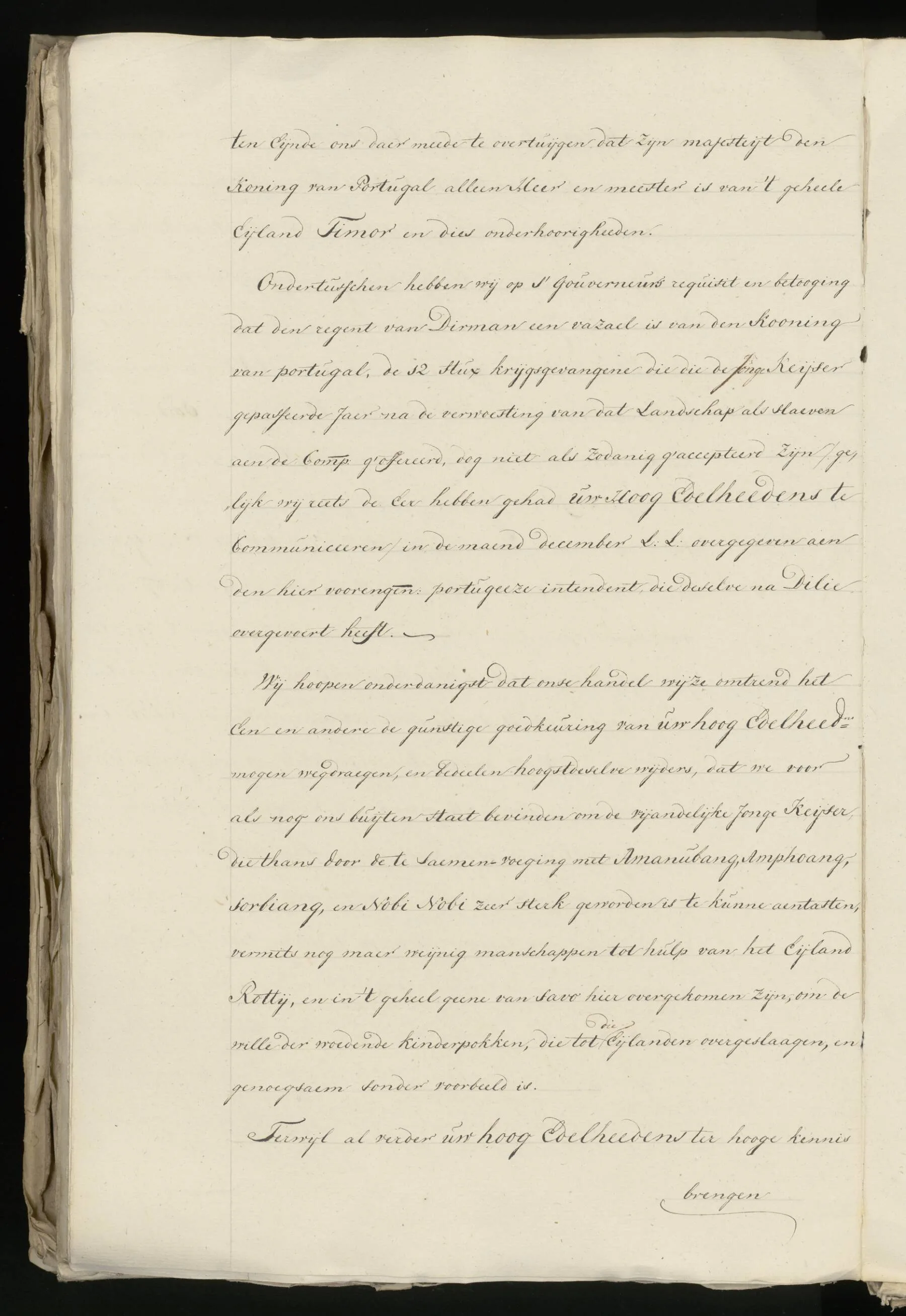
“…since only a few fighting men have come across to help from the island of Rote, and none at all from Savu, on account of the raging smallpox that has jumped over to those islands and is virtually without precedent.”
“…vermits nog maer weijnig manschappen tot hulp van het Eijland Rottij, en in ’t geheel geene van Savo hier overgekomen zijn, om de wille der woedende kinderpokken, die tot [die] Eijlanden overgeslaagen, en genoegsaem sonder voorbeeld is.”
Notice the clerk’s tiny correction inserted above the line (the second “die” before “Eijlanden”). On the next page, the letter tells how Christoffel Amalo Moeda, the Regent of Termanu on Rote, borrowed a Chinese two-masted prau to bring 100 warriors to assist the Dutch, smashed on a reef, and lost four men plus his fighters’ finest ceremonial ornaments—because, the Dutch explain, they always carry their best finery to war. Even so, the regent promised to sail again once the smallpox subsided.
26 February 1789Pasir, East Borneo: A sultan flees inland across the Makassar Strait
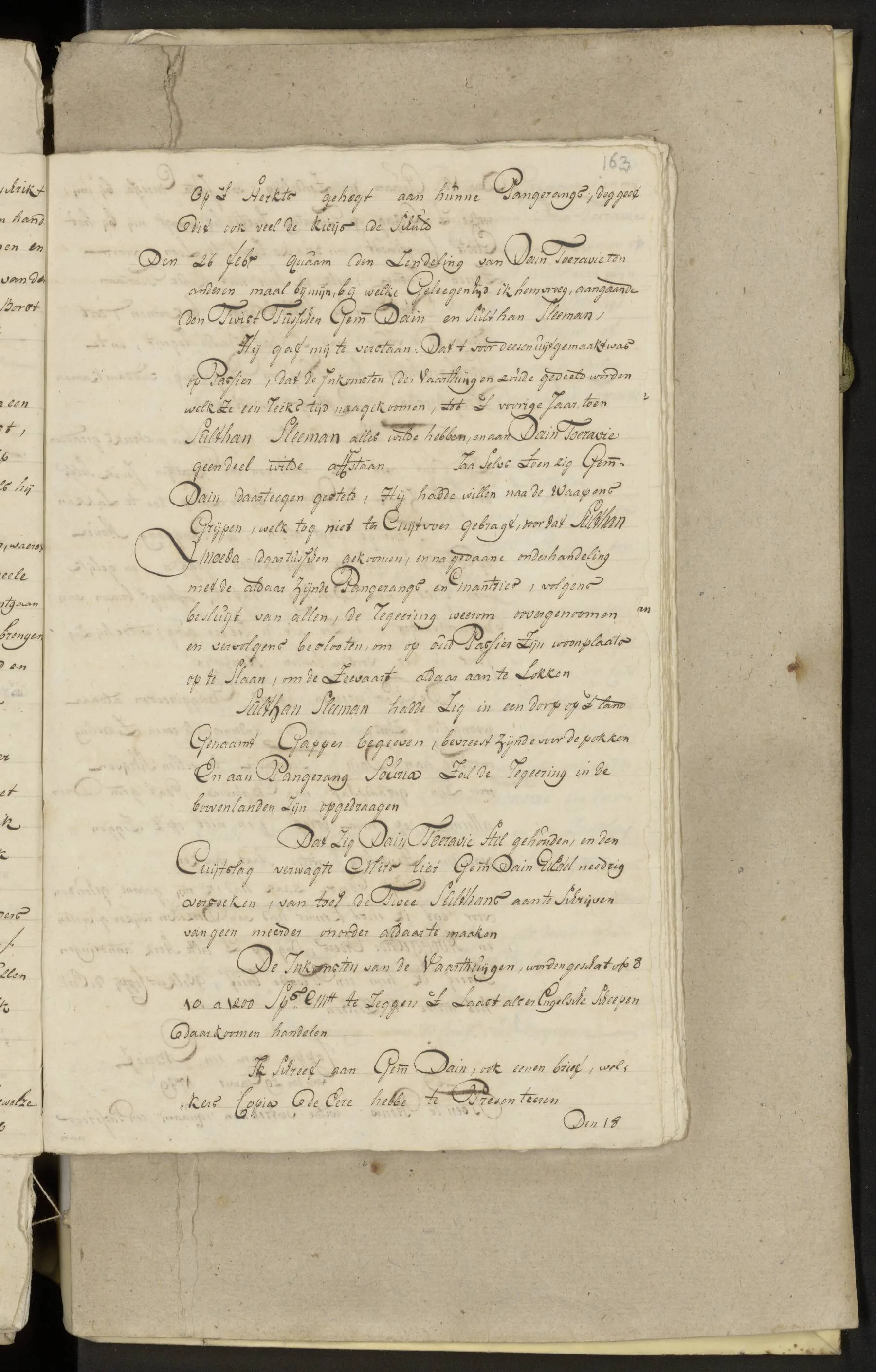
“Sultan Sleeman had moved to a village in the countryside called Gapper, being afraid of the pox, and the government of the uplands was said to have been handed over to Pangeran Souria.”
“Sulthan Sleeman hadde zig in een dorp op ’t land genaamt Gapper begeeven, bevreest zijnde voor de pokken. En aan Pangerang Souria zal de regeering in de bovenlanden zijn opgedraagen.”
This is the closest dated smallpox report to Makassar during the late-1788 / early-1789 sailing window. It was entered in Castle Rotterdam’s own secret diary from an envoy’s report—showing that Makassar’s clerks listened for smallpox news across the strait even when their own town was quiet. Pasir traded with Makassar, but sits northwest across the strait, in the opposite direction from the Australian monsoon run.
14 October 1790Ternate, Maluku: Eight Makassar fishers testify to sailing for “Marege”
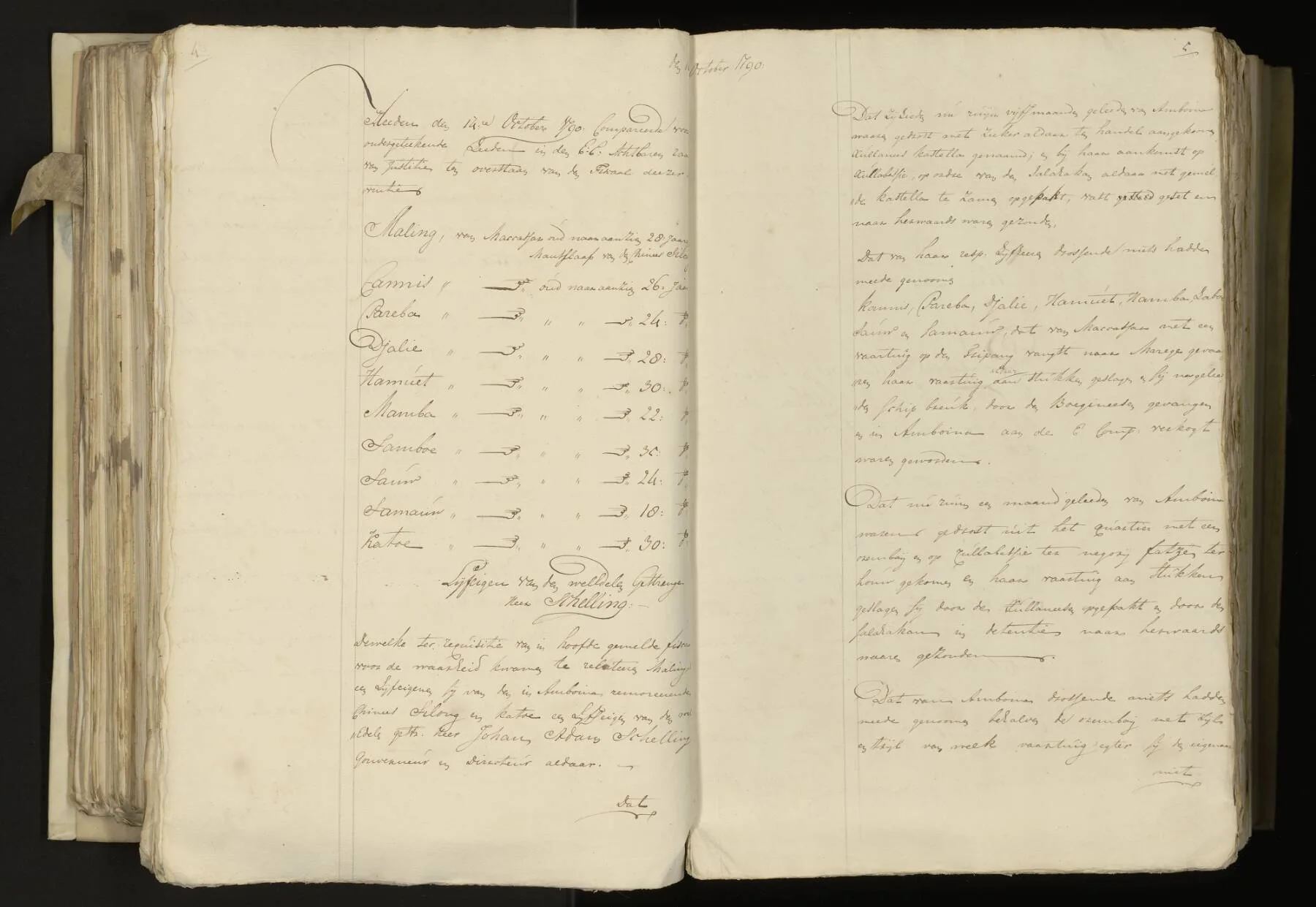
“Kannis, Pareba, Djalie, Hamuet, Mamba, Laboe, Sauw, and Samauw declared that having sailed from Makassar in a vessel on the trepang catch to Marege, their boat was smashed to pieces, and after their shipwreck they were captured by Bugis and sold in Ambon to the Honourable Company.”
“Kannis, Pareba, Djalie, Hamuet, Mamba, Laboe, Sauw en Samauw, dat van Maccassar met een vaartuig op den Tripang vangst naar Marege gevaaren, haar vaartuig aan stukken geslagen, en sij na geleeden schipbreuk door de Boegineesen gevangen en in Amboina aan de E. Comp. verkogt waren geworden.”
An unexpected bonus find from checking Makassar’s trepang records. These eight men (aged 18 to 35) had escaped slavery in Ambon five months earlier “to regain their freedom,” only to be recaptured at Sula Besi and sent back in handcuffs. Their sworn testimony puts the Makassarese word for northern Australia—Marege—into a dated European archive thirteen years before Matthew Flinders heard it from the trepang captain Pobassoo in 1803.
Why the long gaps matter
Notice how often Dutch clerks counted the years since the last visit. Ambon in 1787 had seen nothing like it since the early 1700s. Ternate in 1792 said smallpox had been absent for 27 years, pointing straight back to 1764–65, when Makassar and Ternate papers do record an outbreak. Banjarmasin on southern Borneo wrote in October 1778 that nobody there had known smallpox since 1764. Even Makassar itself, a bigger and busier port, shows discrete bursts separated by seven to ten years: 1765–67 among the nobility of Tanete and Bone, 1772–73 when the king of Bima died and “thousands” perished on Sumbawa and Selayar, and spring 1782.5
That rhythm settles an older disagreement among historians of Southeast Asian medicine. Frank Fenner and Anthony Reid suggested that smallpox became endemic (constantly circulating) in major Indonesian ports from the sixteenth century onward. Peter Boomgaard doubted it, noting he had seen no pre-1800 evidence for endemicity outside perhaps Batavia, which Ternate’s governors indeed describe in the 1780s as a place where smallpox “rages now and then.” Judy Campbell relied on Fenner’s assumption: if smallpox was always present in South Sulawesi, any year’s trepang fleet could carry it south. The Company’s eastern posts back Boomgaard instead. Because smallpox burned through these islands in spaced-out epidemics, a crew sailing from Makassar could only carry the virus during an active outbreak—and in December 1788 Makassar was six years clear.
| Document date | Place | What the Dutch clerks recorded | Verification | Archive scan |
|---|---|---|---|---|
| Spring 1782 | Makassar, Sulawesi | Council orders graves dug 4 feet deep (at least 3 feet of earth above the body) with a 5-rixdollar fine because smallpox is killing crowds daily. | Image-verified | VOC 3623, scan 137 ↗ |
| 28 May 1784 | Banda Neira | Letter to Makassar’s governor: political calm, “but the smallpox brought from the west is again carrying off many people.” | HTR text | VOC 8262, scan 145 ↗ |
| 20 Sep 1786 | Kupang, Timor | Began Feb 1786; “terrible slaughter” since April; well over 1,000 dead within two hours of Kupang in five months, plus >200 Savunese auxiliaries and 150 workmen; survivors hiding in caves and cliffs. | Image-verified | VOC 3732, scan 552 ↗ |
| 19 Mar 1787 | Ambon | Brought in Dec 1786 by a Chinese ship from Java; >3,000 dead under the main castle in 3 months (3,573 by year-end); first outbreak since the early 1700s; vessel inspections ordered. | Image-verified | VOC 3755, scan 100 ↗ |
| 20 Sep 1787 | Rote & Savu | Smallpox jumps from Timor to Rote and Savu (“virtually without precedent”), keeping Savu’s fighting men from sailing to Kupang. | Image-verified | VOC 3810, scan 432 ↗ |
| 26 Feb 1789 | Pasir, East Borneo | Makassar secret diary logs an envoy’s report that Sultan Sleeman moved to an inland village named Gapper, “fearing the pox.” | Image-verified | VOC 3863, scan 815 ↗ |
| 30 Sep 1789 | Belu, central Timor | Traders reaching Belu that spring found smallpox raging again; hill peoples refused to come down to trade beeswax; contagion spread back into Timor’s interior. | Image-verified | VOC 8307, scan 54 ↗ |
| Nov 1791–92 | Ternate, Tidore, Bacan, Manado, Halmahera | First outbreak in 27 years (with measles); “innumerable” dead, mostly locals and enslaved people; campaign against Prince Nuku postponed; people on Halmahera flee clove-eradication gangs. | HTR text | VOC 3958 / 8158 ↗ |
| May–Jul 1792 | Solor & Timor | Smallpox “blown over from Solor”; roughly 1,500 dead at Lamakera. | HTR text | VOC 8258, scans 769–780 ↗ |
Bonus find: an early Dutch record of “Marege”
Checking Makassar’s harbourmaster registers (Sjabandhaars specificatien) for 1781–82 and 1788–89 did not turn up sick crews, because the registers never list Australia as a destination. Every registered boat is a larger merchant vessel (2 to 25 lasten, skippered by Chinese, peranakan Chinese, Malay, Bugis, and Dutch burgher buyers) clearing for regional hubs like Bonerate, Buton, Sumbawa, and Bima. As a 1767–68 Castle Rotterdam letter explains, the actual sea-cucumber fishers worked in smaller open boats of half a last to one last under separate “fishers’ passes” below the harbourmaster’s threshold.6
Outside the registers, though, the Australian fishery shows up repeatedly. “Marege” (the Makassarese word for northern Australia) appears as a sailor’s nickname by 1765—a skipper called Bapa Marege (“Father Australia”)—and in 1782 a Makassar crewman named Marege sailed beside a shipmate named Tripang. A Castle Rotterdam letter of 17 June 1789 reports price haggling with the captain of the annual Chinese junk over “de triepangs Marege, zijn drie zoorten” (three grades of Marege sea cucumber at 13, 12, and 11 Spanish rixdollars per picul), noting that nearly all the trepang fishers had already returned for the 1788–89 season.
The clearest eyewitness record turned up on Ternate on 14 October 1790. Ten enslaved men who had escaped from Ambon in a small boat “to regain their freedom” were caught at Sula Besi and questioned by the Council of Justice. Eight of them—Kannis (26), Pareba (24), Djalie (28), Hamuet (30), Mamba (22), Laboe (35), Sauw (24), and Samauw (18)—testified that they had been free men from Makassar who sailed “op den Tripang vangst naar Marege” (“on the trepang catch to Marege”), wrecked their vessel, were seized by Bugis raiders, and were sold to the Dutch Company in Ambon. Ternate sent them back to Ambon in handcuffs. Checked directly against the scan (see entry 6 in the manuscript reader above), their deposition puts a named Makassar crew and the explicit word Marege into a European archive thirteen years before Matthew Flinders recorded it from the Macassan captain Pobassoo off Arnhem Land in 1803.
Full methodology: testing an absence in 4.8 million pages
A blank search result can easily mean you missed an eighteenth-century spelling, handwriting recognition garbled the word, or clerks stopped recording that sort of news. To avoid a false negative, we ran a corpus-wide lexical sweep paired with three calibration checks—testing what the archive does capture before trusting its silence.7
1. Whole-corpus lexical sweep and volume funnel
We queried a local SQLite FTS5 index of all 4,790,000 handwritten-text-recognized (HTR) page scans from the GLOBALISE release of the VOC Overgekomen Brieven en Papieren (Nationaal Archief 1.04.02, Amsterdam and Zeeland chamber copies) using 24 primary period Dutch and Malay smallpox/measles terms, followed by 15 extra spelling variants (which added zero Makassar hits).
View all 39 Dutch & Malay search terms
Primary (24): kinderpok*, kinderpock*, "kinder pokken", "kinder pocken", "kinder pokjes", pokken, pocken, pokjes, pokjens, pockjes, pokskens, kinderziekte, "kinder ziekte", kinderziekt*, pokziekte, poksiekte, pokzieckte, mazelen, maselen, tjatjar, tsjatsjar, chachar, "spaanse pokken", "spaansche pokken".
Check variants (15): kindersiekte, "kinder siekte", kinderzieckte, poxkens, "de pok", and related phonetic/HTR spellings.
To prevent volume-date mislabelling from hiding a document, we pulled every volume whose catalogue date range touched 1783–1792 and that contained at least five Makassar documents. That yielded 35 volumes of council resolutions, enclosures, general and secret letters, secret diaries, harbourmaster lists, and accounts. Every one of the 42 smallpox-term pages inside those 35 volumes was read and accounted for individually.
| Filtering stage | Count |
|---|---|
| Total scans indexed from GLOBALISE VOC OBP (Amsterdam & Zeeland copies) | 4,790,000 |
| Search terms tested (period Dutch & Malay spellings for smallpox and measles) | 24 primary + 15 check variants |
| Pages matching any primary term across all years (1602–1795) | 4,775 |
| Pages in volumes touching 1783–1791 carrying Makassar, Timor, Banda, Ambon, or Ternate papers | 368 |
| Volumes containing ≥5 Makassar documents across 1783–1792 | 35 volumes |
| Smallpox-term pages inside those 35 Makassar volumes | 42 pages |
| ↳ Timor letters bound into the same volumes (inv. 3732, 8253, 8258, 7944) | 22 |
| ↳ Ternate 1791 letters (inv. 3967) | 15 |
| ↳ Ambon handover memoir & Ternate comments on Batavia (inv. 3818, 8145, 8148) | 4 |
| ↳ Pasir, East Borneo report in Makassar secret diary (inv. 3863 = copy 7952) | 1 (×2 copies) |
| ↳ False hits (“pokken” as pouches, a textile list, an individual enslaved person’s description) | 3 |
| Smallpox reports at Makassar, Bone, Bima, Sumbawa, or Selayar (1783–1792) | 0 |
2. Three positive controls that calibrate the silence
- Vocabulary and HTR control: Could the handwriting recognizer be mangling Dutch smallpox words? No. The same query list retrieved nine different HTR spelling variants (
kinderziekte,kinder ziekte,kinderpokken,kinder pokjes,kindere pokken,kinder pocken,pokjes,pokken,kindersiekte) across the Kupang 1786, Ambon 1786–87, Rote/Savu 1787, Belu 1789, Ternate 1791–92, and Makassar 1782 narratives—including Timor and Ternate letters physically bound inside the Makassar volumes. - Same-office historical control: Did Castle Rotterdam’s clerks report smallpox when it struck? Yes. The exact same Makassar offices generated 10 smallpox pages in 1765–67, 14 pages in 1771–73 (down to single Company slaves dying “aan de kinderziekte” in council resolutions), and 2 pages in spring 1782.
- Active-reporting, coverage, and broad-disease controls: Did Makassar’s records thin out in 1788–91? Across the 1786–92 Makassar volumes, 86% to 98% of pages carry recognized text (averaging 150 to 400 tokens per page), with frequent hits for
hospitaal(up to 37 pages per volume) andoverleden(“deceased,” up to 37 pages). Resolutions in 1788–91 continue logging deaths of enslaved Company workers by cause, as “natuurlijke ziekte” (“natural illness”). A broad disease sweep (ziekte,sterfte,besmet*,grasseer*,epidemi*,pest*) across the 1782–92 Makassar volumes catches real non-smallpox outbreaks—malignant fevers (“quaadaartige koorts ziektens”) in 1786–87 and European hospital sickness in 1790–91—confirming that illness was still being recorded.8
3. Image verification vs. machine transcription
Handwriting recognition is good enough to find pages, never good enough to trust on its own. We fetched full-resolution IIIF scans directly from the Nationaal Archief for seven key pages: Makassar 1782 (3623_0137), Kupang 1786 (3732_0552), Ambon 1787 (3755_0100), Rote/Savu 1787 (3810_0432), Pasir 1789 (3863_0815), Belu 1789 (8307_0054), and the Ternate Marege deposition of 1790 (3936_0167). All seven matched the HTR readings against the ink. Every remaining quotation (Banda 1784, Ternate 1791–92, Solor 1792, the earlier 1765–73 Makassar outbreaks, the harbourmaster tables, and the 17 June 1789 price note) is explicitly marked as HTR text and should be checked against scans before formal publication.
What this does not settle, and what to check next
Four real limits remain even with those controls in place:
- The Hague is not Jakarta. GLOBALISE covers the copies shipped home to the Netherlands. Papers kept only at Makassar (now in the Arsip Nasional in Jakarta) and the original Batavia daily registers were not searched.
- Big outbreaks can leave thin paper trails. Makassar’s spring 1782 epidemic, severe enough to require four-foot graves, turns up on just two pages in a full year of records. A minor or coastal outbreak outside Castle Rotterdam’s immediate notice could slip past a keyword search.
- Crews were mixed across islands. Finding Makassar clear in December 1788 undercuts the specific starting point Campbell assumed, and agrees with Nitschke et al.’s 2026 epidemiological model on independent grounds. It cannot by itself rule out a sailor from Timor or another island carrying smallpox aboard a boat, though the only documented 1789 outbreaks nearby (Pasir and interior Belu) lie off the main trepang track.
- Two key books remain unchecked. Gerrit Knaap and Heather Sutherland’s Monsoon Traders (2004, which analyzes the Makassar shipping registers for 1786–89) and Hans Hägerdal and Geneviève Duggan’s Savu (2018) were not open access and still need a specialist check alongside C. C. Macknight’s trepang work.
Four concrete steps would close the remaining gaps: read Makassar’s secret diaries for October to December 1788 page by page as a manual recall check; inspect the Nationaal Archief scans for Ternate 1791–92 and Solor 1792; check the Kupang shipping lists for 1788 (VOC 3810, fol. 93) to see whether Timor or Solor sailors joined the southward trepang voyages; and compare the 1782–92 chronology directly against First Fleet medical journals and Aboriginal oral histories of the 1789 epidemic.9
Notes and sources
-
1
Eyewitness British accounts include Watkin Tench, A Complete Account of the Settlement at Port Jackson (1793), ch. 4, and Governor Arthur Phillip’s dispatches to Lord Sydney. For the two rival theories, see Judy Campbell, Invisible Invaders: Smallpox and Other Diseases in Aboriginal Australia, 1780–1880 (2002), and Christopher Warren, “Smallpox at Sydney Cove – who, when, why?”, Journal of Australian Studies 38 (2014). In 2026, M. C. Nitschke et al. (Nature Human Behaviour 10) modelled continental transmission and found a northern route unlikely to reach Sydney, without using Indonesian archives.
-
2
Campbell’s Sulawesi evidence in Invisible Invaders begins in 1838; for the 1780s she extrapolated from Robert Brown’s 1803 diary note of faint pockmarks on Macassan sailors off Arnhem Land. Warren (2014) countered that there was “no evidence of a major outbreak in Macassar before 1789,” relying on Java-centred secondary works. The VOC Makassar papers show Warren was right for 1783–89 and wrong for 1782.
-
3
Grave-depth resolution: VOC 3623, fols. 96–97 (scan 137), checked directly against the scan. Placard date in general letter of 17 June 1782: VOC 8249, scan 72 (HTR). Winter 1781–82 harbourmaster clearances: VOC 8249, scans 405–456 (HTR).
-
4
Prior-art checks: Peter Boomgaard’s standard survey (BKI 159, 2003) draws mainly on the printed Generale Missiven (which stop in 1750) and lists no dated epidemics at Makassar, Kupang, Ambon, or Ternate in the 1780s–90s. Hans Hägerdal’s monograph on VOC Timor, Lords of the Land, Lords of the Sea (2012), covers 1786–87 on pp. 418–438 without mentioning the Kupang, Rote, or Savu smallpox outbreaks. Two non-open-access books remain to be checked: Knaap & Sutherland, Monsoon Traders (2004), and Hägerdal & Duggan, Savu (2018).
-
5
Earlier VOC outbreaks confirming interval spacing: Makassar & Ternate 1765–67 (VOC 3215, scans 1017–1109); Bima, Sumbawa & Selayar 1772–73 (VOC 3389, scans 710–728; single enslaved deaths at Castle Rotterdam in VOC 3358 and VOC 3412); Banjarmasin Oct 1778 (VOC 3552, scan 1054); Ternate governors describing Batavia as periodically infected (VOC 8145, scan 82; VOC 8148, scan 111). All HTR text.
-
6
1767–68 fishers’-pass letter: VOC 3243, scans 43–44 (HTR). Crewman “Marege” beside “Tripang” (1782): VOC 3648, scan 286 (HTR). 17 June 1789 Marege trepang prices and fleet return: VOC 3858, scans 627–633 (HTR). 14 October 1790 Ternate deposition: VOC 3936, scan 167 (image-verified; resolution on scan 166; Ternate-to-Ambon letter of 4 Dec 1790 on scans 428–429). Whether this is the earliest European archival attestation of Marege still needs checking against C. C. Macknight’s The Voyage to Marege’ (1976) and his 2011 revision.
-
7
All queries were executed locally against the GLOBALISE v2 HTR dump (DOI 10.34894/50ZYWS, CC0) paired with the digitized VOC catalogue (DOI 10.34894/OP20NM). Exact search terms and filtering logic are reproducible from
sweep.pyandFUNNEL.mdin the research archive. -
8
1788–91 Makassar slave-death entries (“natuurlijke ziekte”): VOC 3905, scan 334; VOC 8258, scans 165 & 272. 1786–87 malignant fevers: VOC 3760, scans 26, 176, 245. 1790–91 European hospital sickness: VOC 3939, scans 24 & 232; VOC 8258, scan 309. Searches for inoculation terms (
inent*,inocul*) returned zero across all Makassar volumes. -
9
Related open problem page with bibliography, archives, and approach suggestions: How did smallpox reach Aboriginal communities around Sydney in 1789? For the Kupang 1788 shipping list lead, check VOC 3810 (Timor papers, 1787–88).