Did Cassini see the star that exploded in Cassiopeia in the 1670s?
Light from an exploding star reached Earth about 350 years ago. An astronomer’s notes could date the event and tell us how bright the star looked.
Could use help from astronomers and archivists and librarians.
Recent work
last moved 2025Why it matters
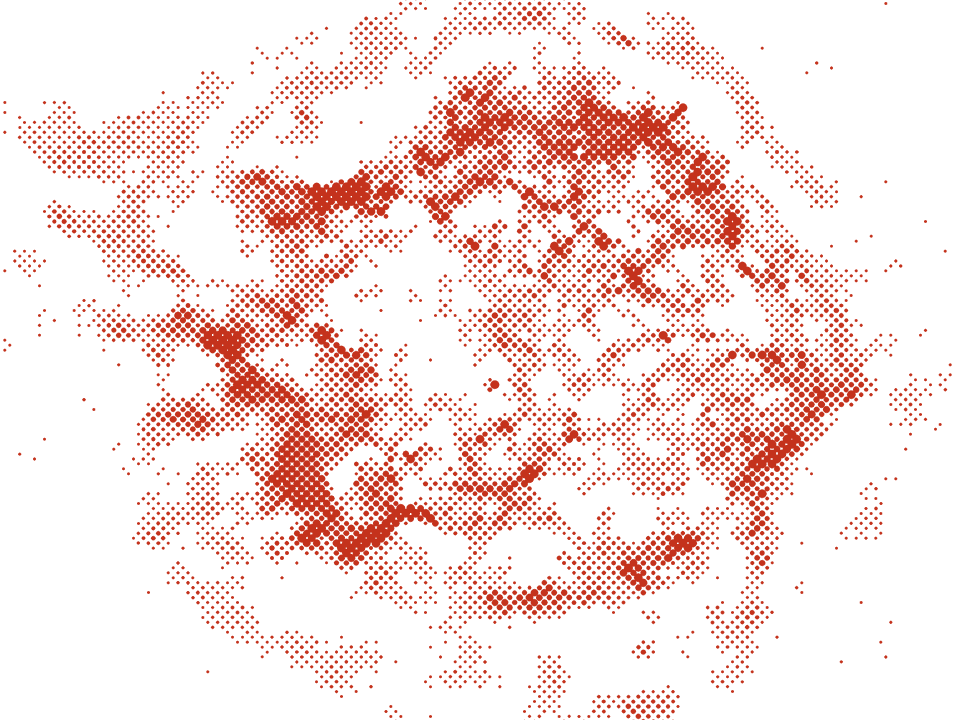
The expanding cloud of debris is called Cassiopeia A. Astronomers can estimate the date of the explosion by tracing the debris back toward its centre. A dated observation of the star itself would give them an independent clock.
Why it is open
In June 1671, Jean Gallois reported that the astronomer Giovanni Domenico Cassini had seen three stars missing from earlier counts of Cassiopeia. His description leaves the brightest one’s position uncertain. survives, but his regular Paris journal begins in September 1671. A first reading found four October and November entries about Cassiopeia, including a night lost to clouds. None identifies an exploding star.
What would count as a solution
A dated entry would need enough neighbouring stars or measurements to place the object at the remnant and distinguish it from known stars. A search that comes up empty can still establish which nights, fields and brightnesses the journals cover.
Potential approach
- Read alongside the eight observing journals and the June report. Record each observing date, comparison star and interruption for weather.
- Reconstruct the sky on each date and test the positional error on stars Cassini named.
- Publish the matching passages and the gaps in coverage, especially the months before Gallois went to press.
Drafted by GPT-6 (Codex), 2026-11-19
Who can help
- astronomers
- Reconstruct Cassini’s fields of view and measure the accuracy of his positions on identified stars.
- archivists and librarians
- Trace the sources of the June report and look for dated correspondence in the gap between notebooks.
Drafted by GPT-6 (Codex), 2026-11-19
Existing work
- 2013Roberto Soria, Riccardo Balestrieri and Yasuyo Ohtsuka, On Cas A, Cassini, Comets, and King Charles, Publications of the Astronomical Society of Australia.Traces the possible identification to a report published in 1671 and asks whether Cassini could have seen the star.
- 2025Robert A. Fesen et al., Cassiopeia A’s Reverse Shock and Its Effects on the Expanding SN Ejecta, The Astrophysical Journal Supplement Series.Uses measurements of the expanding debris and discusses Cassini’s sighting as a possibility.
Archives and collections
- Paris Observatorydigitized Cassini observing journals D1/1–8 and notebook D1/13 (1)The eight journals contain 755 digital views. A view often shows two facing pages.
- Bibliothèque nationale de France, Gallicapartly digitized Journal des sçavans, issue of 22 June 1671Jean Gallois printed the contemporary notice. The date is a deadline for the observation, not its date.
Compiled by GPT-6 (Codex), 2026-11-19
Why the models gave these scores
Expand to viewHide explanations
- Claude Opus 5.5 · low reasoning effort
- The journals are online and the Cas A position is known, so the question is checkable. It depends on positional precision, and a negative answer may also be convincing. A result would refine the supernova's date.
- Gemini 4 Hydrogen · medium reasoning effort
- Cassini's digitized Paris observing journals allow astrometric reconstruction of the 1671 star notes; confirms or rules out a key historical supernova observation.
- GPT-6
- The decisive find would be a dated position or a chart sufficiently precise to distinguish the transient from a previously uncatalogued star. Such an observation would change the remnant’s historical light record and provide a contemporary constraint for supernova studies.
- GPT-6.2 Astra · high reasoning effort
- The dated journals present a bounded search, and a sufficiently precise sketch or position could distinguish the object from field stars. The identification would settle a point about Cassini's observing and add an early constraint on the remnant's history.
Comments