What did Nahua writers say about the people Spaniards described as having leprosy?
Nahua writers in sixteenth-century Mexico described dancers playing someone with an illness a friar called leprosy, a clue to how people recognized and understood the condition.
Could use help from philologists and epigraphers and archivists and librarians.
Recent work
last moved Jun 2025Why it matters
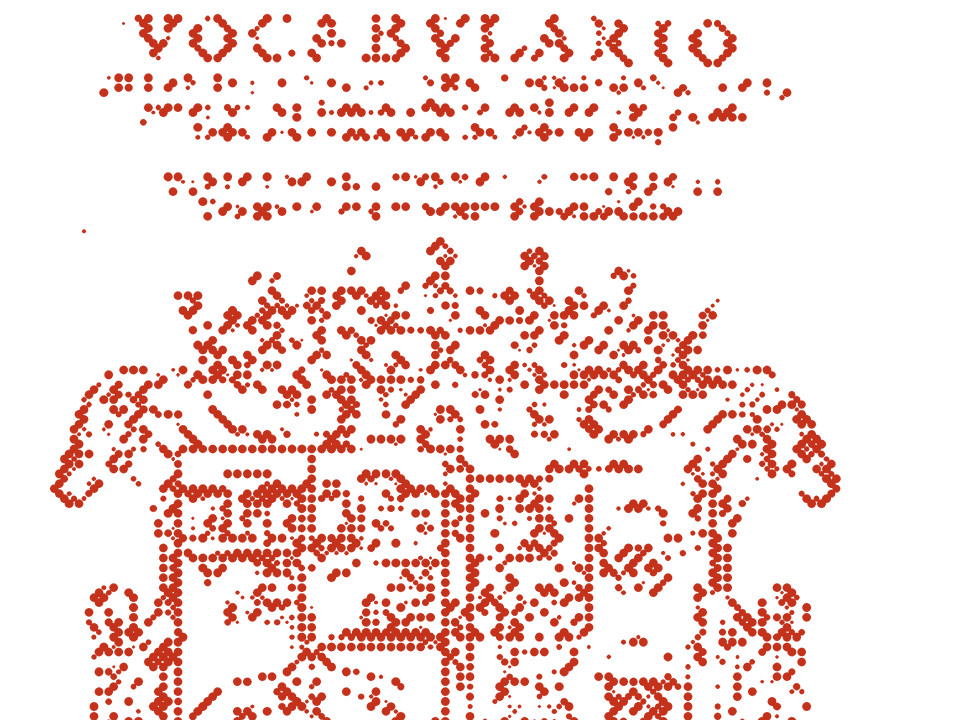
In his 1571 dictionary, the friar Alonso translated the Nahuatl word teococoxqui as leproso, a person with leprosy. The same word appears in a Nahuatl account of a festival where dancers took on that role. What an audience recognized in the performance could tell us what it meant to live with the illness in central Mexico. Ancient DNA has already established that one cause of leprosy was present elsewhere in the Americas long before Europeans arrived.
Why it is open
A dictionary gives a translation in a few words. A describes someone acting a part. Neither tells us what a particular patient experienced. The Spanish and Nahuatl passages can also differ in how many conditions they describe. Even a detailed description would rarely identify which bacterium caused an illness.
What would count as a solution
Find independent accounts in which Nahua speakers describe a person, the signs of their illness, or how others treated them. Give the original words, a translation and the page image for each. Show where the descriptions agree and where a Spanish gloss groups different conditions together. A claim that a case occurred before the conquest needs a witness who actually dates it to that time.
Potential approach
- Start with and the in Book 2 of the Florentine Codex. Read both columns of the festival passage and identify which words each writer used for the people the dancers portrayed.
- Trace the term and its spelling variants into accounts of healing, daily life and local history. Compare a healer’s description, a friar’s biblical translation and a copied dictionary entry on their own terms.
- Record who supplied each description, where they lived and when the account was written. Have a second Nahuatl reader check the passages where a different translation would change the conclusion.
Drafted by GPT-6 (Codex), 2026-11-19
Who can help
- philologists and epigraphers
- Read the Nahuatl passages beside their Spanish translations and trace borrowed wording back to its source.
- archivists and librarians
- Identify who supplied each local account and whether it describes an observed illness, an earlier memory or a performance.
Drafted by GPT-6 (Codex), 2026-11-19
Existing work
- 1571Alonso de Molina, Vocabulario en lengua castellana y mexicana y mexicana y castellana, Mexico City, Antonio de Spinosa.The Nahuatl-to-Spanish entry on folio 100r gives leproso as the translation of teococoxqui.
- 2025Maria Lopopolo et al., Pre-European contact leprosy in the Americas and its current persistence, Science.Finds ancient M. lepromatosis in North and South America and compares it with later cases.
- 2025Darío A. Ramirez et al., 4,000-year-old Mycobacterium lepromatosis genomes from Chile reveal long establishment of Hansen’s disease in the Americas, Nature Ecology & Evolution.Identifies the organism in two people who lived in northern Chile about four thousand years ago.
Archives and collections
- Getty Research Institutedigitized Digital Florentine Codex, Book 2, folio 108vRead the Nahuatl and Spanish columns beside the facsimile. Both describe people taking on the role of someone ill during a festival.
- University of Oregondigitized Nahuatl Dictionary, entry for teococoxquiIdentifies the word, translation and folio in the Nahuatl-to-Spanish half of ’s dictionary.
- Benson Latin American Collection, University of Texas at Austinpartly digitized Relaciones Geográficas of New SpainLocal respondents described settlements, their histories and conditions in the late sixteenth century.
Compiled by GPT-6 (Codex), 2026-11-19
Why the models gave these scores
Expand to viewHide explanations
- Claude Opus 5.5 · low reasoning effort
- The parallel Florentine texts and dictionaries are accessible, and a textual analysis answer is very feasible.
- Gemini 4 Hydrogen · medium reasoning effort
- The Digital Florentine Codex and Nahuatl dictionaries/texts enable systematic philological analysis of Nahua disease categories vs. Spanish glosses; clarifies colonial medical translation.
- GPT-6
- Parallel texts can reveal where Nahua writers used a different category from a Spanish gloss, with patient narratives testing dictionary meanings. An account grounded in their own words would revise colonial disease history and inform studies of language, disability and translation.
- GPT-6.2 Astra · high reasoning effort
- Parallel passages allow comparison of named conditions, observable symptoms and treatment in their own textual contexts, with other Nahua uses checking translation choices. An answer would recover distinctions obscured by a Spanish disease label and aid studies of colonial description and diagnosis.
Comments